Deep Fryers, Bhattis, Tandoors and Everything Else an Indian Restaurant Kitchen Needs
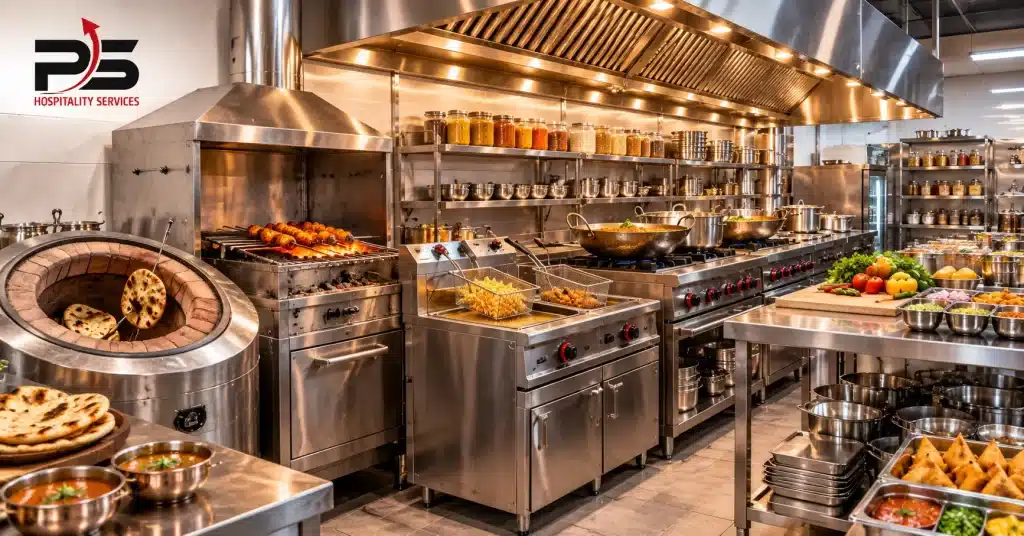
Walk into the back of any busy Indian restaurant during dinner time, and you’ll see the kitchen isn’t really one space. It’s many small work areas, all running at once. One person is frying pakoras. Another is making dosa on a hot plate. A tandoor is glowing in the corner. A bhatti is cooking three curries side by side. Each of these spots needs the right equipment to keep up.
Most people planning a new kitchen think hard about the big items and assume the small stuff will sort itself out. But in real kitchens, it’s often the small things a shaky cutting table, a weak chimney that slow everything down first. This guide walks through each piece of equipment, one by one, in plain words, so you don’t miss anything when setting up your own kitchen.
If you’re setting this up for a hotel instead of a small restaurant, the same ideas still apply just on a bigger scale. You can see how this is usually done for Hotel Kitchen Equipment Manufacturers here.
Deep Fryers: Getting the Frying Right
Pakoras, samosas, and fried starters are on almost every Indian menu. This is one item where a weak machine shows up fast customers notice right away if the food is soggy or undercooked.
What matters most: can the fryer keep the oil hot even when many orders go in one after another? A fryer that loses heat and takes too long to warm back up will ruin food during busy hours, even if the cook is doing everything right.
What to check before buying a deep fryer:
- How thick and strong the tank is thin steel loses heat fast
- Whether the burner is strong enough for the amount of oil it holds
- How fast the oil heats back up after cold food goes in
Tawa and Dosa Plates: Getting an Even Cook
If your menu has South Indian food, parathas or other tawa dishes, this equipment stays busy through most of the day. The flat surface needs to heat evenly, not just in the middle.
If dosas come out crisp in the centre but soft at the edges, that’s not the cook’s fault. That’s a plate problem. The same goes for a tawa that starts heating unevenly after a few months it usually means the metal or the heating design wasn’t made for daily, heavy use.
Bhattis: The Heart of an Indian Kitchen
The bhatti is usually where most of the cooking happens. Most curries and gravies are made here. A good bhatti keeps a strong, steady flame for hours without getting weaker, and the metal body doesn’t bend or wear out from the daily heating and cooling.
Many restaurants serve both Indian and Chinese food, so they use a mix of Indian burners and Chinese burners on the same bhatti. The key is that every burner works equally well so the wok side doesn’t fall behind the curry side during a rush. If you’re deciding between the two, take a look at how Indian and Chinese burners are different before you choose.
Tandoors: Built to Handle Nonstop Orders
Along with the bhatti, the tandoor does a lot of the cooking work naans, kebabs, and tikkas keep going in and out all evening. The most important part, and the one people often miss, is the inside lining. A good lining holds the heat well, even with the lid opening again and again. A weak lining loses heat fast, so the tandoor has to be fired harder to keep up and that wears it out sooner.
You can read our full guide on what makes a tandoor last under daily use if you’re comparing options.
Freezers: Where Good Food Really Starts
It’s easy to treat the freezer as a small decision, but almost everything on the menu depends on it. If a freezer can’t hold its temperature during a long, busy day, you don’t just lose one dish you risk your whole frozen stock.
Two things matter most: the quality of the compressor, and how thick the insulation really is not just how big the freezer looks from outside. A supplier who can explain these details clearly, instead of giving vague answers, usually knows what keeps a kitchen’s cold storage working well for years.
Cutting Tables: Small Item, Big Impact
People often think of the cutting table as a small, unimportant item. But it says a lot about the whole kitchen setup. A steel table with strong welding and solid legs stays firm through years of daily chopping. A cheap, thin one starts to wobble within a few months, which slows down prep work and creates a mess near the busiest part of the kitchen.
It’s a small item to buy, but it often tells you how careful a kitchen owner was with every other piece of equipment too.
Chimneys: The Part Nobody Notices Until It’s Missing
A fryer, a bhatti, and a tandoor running together create a lot of heat and smoke. Without a properly sized chimney, all of that has nowhere to go. A weak or poorly placed chimney makes the kitchen hot and hard to breathe in. This slows staff down and wears out other equipment faster. Ventilation is easy to forget during planning, but it affects everything else in the kitchen.
Bringing It All Together
None of this equipment works well on its own. A strong fryer with a weak chimney, or a great tandoor with a small freezer, still leaves a weak point somewhere in the kitchen. The best approach is to plan everything together, based on your real menu and daily volume not add pieces one at a time after problems show up.
This is where a manufacturer who understands the whole kitchen not just one type of machine makes a real difference. PS Hospitality Services builds and supplies equipment for every part of the kitchen covered here, for restaurants, hotels, and bakeries. If you’re looking for Commercial Kitchen Equipment in Siliguri, Kolkata, or nearby areas, you can see our full range on Our Products.
If you’re running a quick-service kitchen instead of a full sit-down menu, your needs are a bit different. Take a look at what fast food kitchens actually need for high-volume service as well.
Frequently Asked Questions
1.What equipment does a basic Indian restaurant kitchen need to start with?
At the least, you need a deep fryer, a bhatti or burner line, a tandoor (if your menu has tandoori food), a griddle or tawa, a freezer, prep tables, and good ventilation. The exact list depends on your menu.
2.How do I know if my deep fryer is strong enough for my kitchen?
Check how fast the oil gets hot again after cold food goes in not just how big the fryer is. If it takes too long to heat back up, food will come out greasy or undercooked during busy hours.
3.Why does my dosa plate cook unevenly even though the cook is skilled?
This is almost always a problem with the plate, not the cook. A good dosa plate spreads heat evenly across the whole surface, including the edges.
4.Do I need a separate burner for Chinese food if my menu is mixed?
Many kitchens use a separate Chinese burner along with Indian burners, since the cooking styles are different. What matters most is that every burner on the line works equally well.
5.How often should a commercial freezer be checked or serviced?
Most freezers should be checked every few months, especially in busy kitchens, so small problems don’t turn into bigger ones that affect food safety.
6.Why does chimney size matter if the kitchen already feels okay?
A chimney can seem fine day-to-day but still be too small for a busy fryer, bhatti, and tandoor running together. The effects build up slowly more heat, slower staff, and faster wear on nearby equipment rather than showing up all at once.