Choosing the wrong vendor is a type of mistake that does not present itself immediately; it presents itself in the form of flickering burners in the middle of the busiest meal period three months down the line or failure to maintain temperature in the refrigerator a week before an inspection. If you are trying to source commercial kitchen appliances manufacturing companies in India, then choosing the correct supplier is an issue that should be done right on the first attempt.
This is not necessarily about looking for the most affordable quote. It’s about finding a supplier who’ll still take your call two years after installation, when something needs servicing and you’re mid-shift with a full dining room
Why the Supplier Matters More Than the Equipment Itself
Here’s something people don’t think about until it’s too late two suppliers can sell you the exact same specifications on paper, and you’ll still end up with wildly different experiences. One shows up when something breaks. The other stops answering calls once the invoice is cleared.
When you’re evaluating commercial kitchen equipment manufacturers in India, the equipment is only half the decision. The other half is the relationship between how they handle installation, how fast they respond to a service call, whether they actually stock spare parts or need to order them from three states away. A supplier based closer to you, especially if you’re running a kitchen in North Bengal, tends to solve this problem simply by being reachable.
Start With What They Actually Manufacture
A lot of suppliers are really just traders they buy from a few factories, slap their name on it, and resell. Nothing wrong with that model exactly, but it does mean less control over quality and slower turnaround if something’s wrong with a batch.
If you can find an actual commercial baking oven manufacturer, someone who builds the oven rather than just sourcing it, you get a few advantages. Custom sizing becomes possible. Repairs are faster because they understand their own build. And if you ever need a second oven that matches your first one exactly, a manufacturer can replicate it a reseller usually can’t.
The same logic applies if you’re specifically after a bakery kitchen equipment manufacturer for a standalone bakery or a hotel with an in-house bakery section. Ovens, proofers, mixers these need to work together as a system, and a manufacturer who understands bakery workflows end-to-end tends to design better than someone assembling parts from different vendors.
Ask About the Burners Specifically
This one gets overlooked constantly. Everyone focuses on the big-ticket items fridges, ovens, counters and forgets that the burner is where most of the actual cooking happens, every single day, for years.
An Indian burner for commercial kitchen use needs to handle a very different load than a domestic one. Higher flame output, continuous use for six to ten hours a shift, and depending on where you’re setting up inconsistent gas pressure. If you’re in a hill location like Darjeeling or Pelling, gas supply logistics alone can affect what kind of burner setup actually makes sense. A good supplier will ask about your location and your menu before recommending a burner size, not just hand you a standard model off the shelf.
The Boring Equipment Matters More Than You’d Think
Nobody gets excited about a cutting table. But ask any chef what breaks their workflow fastest, and a wobbly chopping table or an undersized sink usually makes the list before anything fancier does.
Here’s a rough rundown of what’s worth checking carefully, item by item:
Cutting table and chopping table: Look at the surface material and the frame underneath, not just the tabletop. A cheap frame flexes under weight over time, and that’s when boards start sliding around mid-prep.
Deep fridges: Ask specifically about compressor brand and insulation thickness. This matters even more in warmer plains locations, but honestly it matters in hill areas too, since power fluctuations affect compressor life regardless of climate.
Sinks and SS wash basin units: Check the gauge of stainless steel used. Thinner steel dents easily and starts looking rough within a year, especially under constant use.
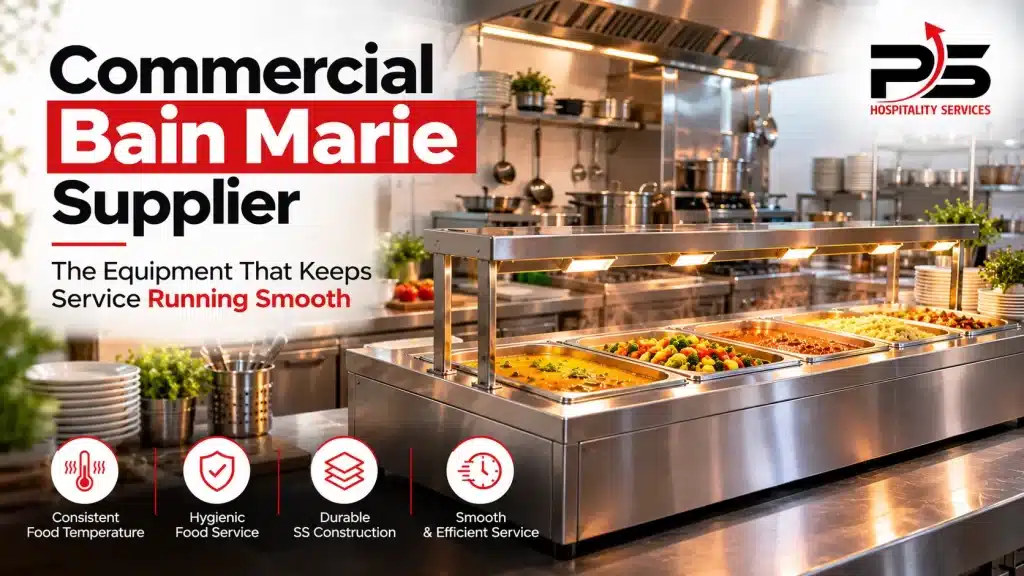
Bain-marie: Confirm whether the heating element is standalone or shared across compartments. Shared elements mean if one section fails, you might lose the whole unit until it’s fixed.
Salad counters: These get opened and closed constantly during service, so hinge and gasket quality matters a lot more here than people expect.
Service trolleys: Wheel quality. That’s really it. Cheap casters lock up or wobble within months, and a stuck trolley during service is its own small disaster.
None of this is glamorous, but this is the equipment your staff touches fifty times a day. Getting it right matters more than most people realize when they’re comparing quotes.
Why Local Supply Chains Matter More Than People Assume
When establishing an outfit in locations such as Rangpo, Singtam, or Ranipur, delivery logistics become truly significant. Equipment that is sourced from afar from a metro city may be late by weeks in its arrival, and if it gets damaged or requires replacement parts along the way, then more waiting time is expected.
This is where a supplier familiar with commercial kitchen equipment in North Bengal starts to matter a lot. They already know the terrain literally and logistically. Deliveries into hill towns need different planning than deliveries into flat, easily accessible areas. A supplier who’s done this route before will plan for it instead of running into it for the first time with your order.
In case you are looking at an entry point from Bhutan, it is the same deal. Border crossing logistics increase the burden of documentation, timing, and sometimes even issues of importation that your supplier will not have anticipated. Just ask if they have ever shipped to that place before.
Questions to Ask Before You Buy
There are a number of fairly simple questions that help differentiate between reliable commercial kitchen equipment manufacturers and those simply selling products:
Do you produce these yourself or do you source them elsewhere?
How long is the turnaround time on your service calls?
Do you keep any replacement parts on hand or do they have to be ordered?
Have you installed one before and if so, can you show me one that has been working for a year or more?
What is your warranty, and does it cover labor as well as parts?
The latter question, especially, tends to catch many people off guard.
A warranty that covers parts but not labor can still leave you paying a technician’s visit fee every single time something needs attention.
Don’t Skip the Site Visit
If a supplier is willing to build for one of the toughest terrains around say, delivering to Darjeeling or setting up in Pelling without ever asking about your kitchen layout, ceiling height, ventilation, or power supply, that’s a red flag worth paying attention to. Good industrial kitchen equipment manufacturers usually want to see the space, or at least get detailed photos and measurements, before finalizing an order. Skipping this step is how you end up with an oven that doesn’t fit through the doorway, or a burner that overloads the existing gas line.
Why PS Hospitality Services Is Worth a Conversation
At PS Hospitality Services, the focus has always been on the two things that actually matter building solid equipment and being reachable after it’s installed. Whether you’re setting up a full kitchen in Darjeeling, a bakery section that needs a proper commercial baking oven manufacturer’s attention, or a compact setup near Rangpo or Singtam, the approach stays the same: understand the kitchen first, then build for it.
From cutting tables to full bain-marie counters, from Indian burners built for continuous heavy use to deep fridges suited for hill climates, the equipment is manufactured with the day-to-day reality of a working kitchen in mind not just showroom specifications.
Before You Sign Anything
Choosing between commercial kitchen equipment manufacturers in India isn’t just a procurement decision it’s a decision that affects how smoothly your kitchen runs for years afterward. Take the time to ask the harder questions, check who actually manufactures what you’re buying, and make sure your supplier understands the realities of your location, whether that’s a hill town like Darjeeling and Pelling or a growing commercial hub like Rangpo, Singtam, or Ranipur.
Get this part right, and the equipment becomes something you stop thinking about which, in a busy kitchen, is exactly what you want.
Frequently Asked Questions
1. How do I know if I’m dealing with an actual manufacturer or just a reseller?
Ask directly if they have their own production facility, and ask to see it if possible. Genuine commercial kitchen equipment manufacturers in India are usually happy to show you their setup resellers tend to get vague when you push on this.
2. What should I look for in a commercial baking oven manufacturer specifically?
Check whether they build ovens to custom sizes or only sell fixed models. A proper commercial baking oven manufacturer will ask about your baking volume and space before recommending anything, rather than just pushing their standard unit.
3. Does location really affect equipment choice, like for an Indian burner for commercial kitchen use?
Yes, more than people expect. Gas pressure, altitude, and power reliability all vary by region. An Indian burner for commercial kitchen setups in hill areas like Darjeeling or Pelling may need different specs than one going into a plains kitchen.
4. Is it worth hiring a supplier based near North Bengal instead of a big-city one?
Often, yes. A supplier already familiar with commercial kitchen equipment in North Bengal understands delivery routes into places like Rangpo, Singtam, or Ranipur, which saves time and reduces the chances of delays or damaged shipments.
5. Can suppliers deliver kitchen equipment across the border into Bhutan?
Some can, but not all. Always ask if they’ve handled Bhutan deliveries before the logistics and paperwork are different, and a supplier without prior experience there may run into delays you didn’t plan for.
6. What’s the most overlooked equipment when people plan a new kitchen?
Usually the basics cutting tables, sinks, and SS wash basin units. They don’t seem important during planning, but poor quality here causes daily frustration once the kitchen is actually running.